Here are links to all previous issues of Point Lookout, a weekly email newsletter. Bookmark this page. Or browse the Point Lookout archive by topic. Subscribe now.
 Coming April 24: Antipatterns for Time-Constrained Communication: 1
- Knowing how to recognize just a few patterns that can lead to miscommunication can be helpful in reducing the incidence of problems. Here is Part 1 of a collection of communication antipatterns that arise in technical communication under time pressure. Available here and by RSS on April 24.
 And on May 1: Antipatterns for Time-Constrained Communication: 2
- Recognizing just a few patterns that can lead to miscommunication can reduce the incidence of problems. Here is Part 2 of a collection of antipatterns that arise in technical communication under time pressure, emphasizing those that depend on content. Available here and by RSS on May 1.
This page has links to articles from 2004. For other years:
December 29, 2004
 Appreciations
- When we take time to express to others our appreciation for what they do for us, a magical thing happens.
December 22, 2004
 When You Can't Even Think About It
- Some problems are so difficult or scary that we can't even think about how to face them. Until we can think, action is not a good idea. How can we engage our brains for the really scary problems?
December 15, 2004
 Totally at Home
- Getting home from work is far more than a question of transportation. What can we do to come home totally — to move not only our bodies, but our minds and our spirits from work to home?
December 8, 2004
 A Guide for the Humor-Impaired
- Humor can lift our spirits and defuse tense situations. If you're already skilled in humor, and you want advice from an expert, I can't help you. But if you're humor-impaired and you just want to know the basics, I probably can't help you either. Or maybe I can...
December 1, 2004
 Decisions, Decisions: II
- Most of us have participated in group decision making. The process can be frustrating and painful, but it can also be thrilling. What processes do groups use to make decisions?
November 24, 2004
 Are You Micromanaging Yourself?
- Feeling distrusted and undervalued, we often attribute the problem to the behavior of others — to the micromanager who might be mistreating us. We tend not to examine our own contributions to the difficulty. Are you micromanaging yourself?
November 17, 2004
 Decisions, Decisions: I
- Most of us have participated in group decision making. The process can be frustrating and painful, but it can also be thrilling. What processes do groups use to make decisions? How do we choose the right process for the job?
November 10, 2004
 The Fine Art of Quibbling
- We usually think of quibbling as an innocent swan dive into unnecessary detail, like calculating shares of a lunch check to the nearest cent. In debate about substantive issues, a detour into quibbling can be far more threatening — it can indicate much deeper problems.
November 3, 2004
 Status Risk and Risk Status
- One often-neglected project risk is the risk of inaccurately reported status. That shouldn't be surprising, because we often fail to report the status of the project's risks, as well. What can we do to better manage status risk and risk status?
October 27, 2004
 Bois Sec!
- When your current approach isn't working, you can scrap whatever you're doing and start again — if you have enough time and money. There's a less radical solution, and if it works, it's usually both cheaper and faster.
October 20, 2004
 When Leaders Fight
- Organizations often pretend that feuds between leaders do not exist. But when the two most powerful people in your organization go head-to-head, everyone in the organization suffers. How can you survive a feud between people above you in the org chart?
October 13, 2004
 Personal Trade Secrets
- Do you have some little secret tricks you use that make you and your team more effective? Do you wish you could know what secret tricks others have? Here's a way to share your secrets without risk.
October 6, 2004
 Patterns of Everyday Conversation
- Many conversations follow identifiable patterns. Recognizing those patterns, and preparing yourself to deal with them, can keep you out of trouble and make you more effective and influential.
September 29, 2004
 Devious Political Tactics: Cutouts
- Cutouts are people or procedures that enable political operators to communicate in safety. Using cutouts, operators can manipulate their environments while limiting their personal risk. How can you detect cutouts? And what can you do about them?
September 22, 2004
 The Unappreciative Boss
- Do you work for a boss who doesn't appreciate you? Do you feel ignored or excessively criticized? If you do, life can be a misery, if you make it so. Or you can work around it. It's up to you to choose.
September 15, 2004
 Begging the Question
- Begging the question is a common, usually undetected, rhetorical fallacy. It leads to unsupported conclusions and painful places we just can't live with. What can we do when it happens?
September 8, 2004
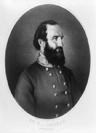 Flanking Maneuvers
- Historically, military logistics practice has provided a steady stream of innovations to many fields, including project management. But project managers can learn even more if we investigate battlefield tactics.
September 1, 2004
 The Power of Presuppositions
- Presuppositions are powerful tools for manipulating others. To defend yourself, know how they're used, know how to detect them, and know how to respond.
August 25, 2004
 Some Truths About Lies: II
- Knowing when someone else is lying doesn't make you a more ethical person, but it sure can be an advantage if you want to stay out of trouble. Here's Part II of a catalog of techniques misleaders use.
August 18, 2004
 How to Make Meetings Worth Attending
- Many of us spend seemingly endless hours in meetings that seem dull, ineffective, or even counterproductive. Here are some insights to keep in mind that might help make meetings more worthwhile — and maybe even fun.
August 11, 2004
 Films Not About Project Teams: II
- Here's Part II of a list of films and videos about project teams that weren't necessarily meant to be about project teams. Most are available to borrow from the public library, and all are great fun.
August 4, 2004
- Some Truths About Lies: I
- However ethical you might be, you can't control the ethics of others. Can you tell when someone knowingly tries to mislead you? Here's Part I of a catalog of techniques misleaders use.
July 28, 2004
 Films Not About Project Teams: I
- Here's part one of a list of films and videos about project teams that weren't necessarily meant to be about project teams. Most are available to borrow from the public library, and all are great fun.
July 21, 2004
 The Ties that Bind
- Changing anything in an organization reveals how it's connected to its people, to its processes, to its facilities, and to the overall context. Usually, these connections reach out much further into the organization than we imagine.
July 14, 2004
 Those Across-the-Board Cuts That Aren't
- One widespread feature of organizational life is the announcement of across-the-board cuts. Although they're announced, they're rarely "across-the-board." What's behind this pattern? How can we change it to a more effective, truthful pattern?
July 7, 2004
 Believe It or Else
- When we use threats and intimidation to win debates or agreement, we lay a flimsy foundation for future action. Using fear may win the point, but little more.
June 30, 2004
 Selling Uphill: The Pitch
- Whether you're a CEO or a project champion, you occasionally have to persuade decision makers who have some kind of power over you. What do they look for? What are the key elements of an effective pitch? What does it take to Persuade Power?
June 23, 2004
 Selling Uphill: Before and After
- Whether you're a CEO appealing to your Board of Directors, your stockholders or regulators, or a project champion appealing to a senior manager, you have to "sell uphill" from time to time. Persuading decision makers who have some kind of power over us is a challenging task. How can we prepare the way for success now and in the future?
June 16, 2004
 Team Thrills
- Occasionally we have the experience of belonging to a great team. Thrilling as it is, the experience is rare. How can we make it happen more often?
June 9, 2004
 Team-Building Travails
- Team-building is one of the most common forms of team "training." If only it were the most effective, we'd be in a lot better shape than we are. How can we get more out of the effort we spend building teams?
June 2, 2004
 Take Any Seat: II
- In meetings, where you sit in the room influences your effectiveness, both in the formal part of the meeting and in the milling-abouts that occur around breaks. You can take any seat, but if you make your choice strategically, you can better maintain your autonomy and power.
May 26, 2004
 Take Any Seat: I
- When you attend a meeting, how do you choose your seat? Whether you chair or not, where you sit helps to determine your effectiveness and your stature during the meeting. Here are some tips for choosing your seat strategically.
May 19, 2004
 Give It Your All
- If you have the time and resources to read this, you probably have a pretty good situation, or you have what it takes to be looking for one. In many ways, you're one of the fortunate few. Are you making the most of the wonderful things you have? Are you giving it your all?
May 12, 2004
 Hot and Cold Running People
- Do you consider yourself a body linguist? Can you tell what people are thinking just by looking at gestures and postures? Think again. Body language is much more complex and ambiguous than many would have us believe.
May 5, 2004
 The Fundamental Attribution Error
- When we try to understand the behavior of others, we often make a particularly human mistake. We tend to attribute too much to character and disposition and too little to situation and context. When we seek a better balance, we can adopt a more accepting view of events around us.
April 28, 2004
- Nonworkplace Politics
- When we bring national or local political issues into the workplace — especially the divisive issues — we risk disrupting our relationships, our projects, and the company itself.
April 21, 2004
 Scheduling as Risk Management
- When we schedule a complex project, we balance logical order, resource constraints, and even politics. Here are some techniques for using scheduling to manage risk and reduce costs.
April 14, 2004
 Mudfights
- When we steer the discussion away from issues to attack the credibility, motives, or character of our debate partners, we often resort to a technique known as the ad hominem attack. It's unfair, it's unethical, and it leads to bad, expensive decisions that we'll probably regret.
April 7, 2004
 Who Would You Take With You to Mars?
- What makes a great team? What traits do you value in teammates? Project teams can learn a lot from the latest thinking about designing teams for extended space exploration.
March 31, 2004
 The Hypothetical Trap
- Politicians know that answering hypothetical questions is dangerous, but it's equally dangerous for managers and project managers to answer them in the project context. What's the problem? Why should you be careful of the "What If?"
March 24, 2004
 Intimidation Tactics: Touching
- Workplace touching can be friendly, or it can be dangerous and intimidating. When touching is used to intimidate, it often works, because intimidators know how to select their targets. If you're targeted, what can you do?
March 17, 2004
 When You're the Target of a Bully
- Workplace bullies are probably the organization's most expensive employees. They reduce the effectiveness not only of their targets, but also of bystanders and of the organization as a whole. What can you do if you become a target?
March 10, 2004
 Outsourcing Each Other's Kids
- Outsourcing is now so widespread that it has achieved status as a full-fledged management fad. But many outsourcing decisions lack the justification that a full financial model provides. Here are some of the factors that such a model should include.
March 3, 2004
 Names and Faces
- Most of us feel recognized, respected, and acknowledged when others use our names. And many of us have difficulty remembering the names of others, especially those we don't know well. How can we get better at connecting names and faces?
February 25, 2004
 When You Need a Lift
- When we depend on praise, positive support or consumption to feel good, we're giving other people or things power over us. Finding within ourselves whatever we need to feel good about ourselves is one path to autonomy and freedom.
February 18, 2004
 Resuming Projects: Team Morale
- Sometimes we cancel a project because of budgetary constraints. We reallocate its resources and scatter its people, and we tell ourselves that the project is on hold. But resuming is often riskier, more difficult and more expensive than we hoped. Here are some reasons why.
February 11, 2004
 Decision Making and the Straw Man
- In project work, we often make decisions with incomplete information. Sometimes we narrow the options to a few, examine their strengths and risks, and make a choice. In our deliberations, some advocates use a technique called the Straw Man fallacy. It threatens the soundness of the decision, and its use is very common.
February 4, 2004
 No Surprises
- If you tell people "I want no surprises," prepare for disappointment. For the kind of work that most of us do, surprises are inevitable. Still, there's some core of useful meaning in "I want no surprises," and if we think about it carefully, we can get what we really need.
January 28, 2004
- He's No Longer Here
- Sometimes we adopt inappropriate technologies, or we deploy unworkable processes, largely because of the political power of their advocates, and despite widespread doubts about the wisdom of the moves. Strangely, though, the decisions often stick long after the advocates move on. Why? And what can we do about it?
January 21, 2004
 Coping with Problems
- How we cope with problems is a choice. When we choose our coping style, we help determine our ability to address the problems we face. Of eight styles we can identify, only one is universally constructive, and we rarely use it.
January 14, 2004
 Email Antics: III
- Nearly everyone complains that email is a time waster. Yet much of the problem results from our own actions. Here's Part III of a little catalog of things we do that help waste our time.
January 7, 2004
 There Are No Micromanagers
- If you're a manager who micromanages, you're probably trying as best you can to help your organization meet its responsibilities. Still, you might feel that people are unhappy — that whatever you're doing isn't working. There is another way.
Follow Rick


Send an email message to a friend
rbrenIyeJIiAfnGdKlUXrner@ChacsxirZwZlENmHUNHioCanyon.comSend a message to Rick
A Tip A Day feed
Point Lookout weekly feed
The message
of Point Lookout is unique. Help get the message out.
Please donate to help keep Point
Lookout available for free to everyone.
 My blog, Technical Debt for Policymakers, offers
resources, insights, and conversations of interest to policymakers who are concerned with managing
technical debt within their organizations. Get the millstone of technical debt off the neck of your
organization!
My blog, Technical Debt for Policymakers, offers
resources, insights, and conversations of interest to policymakers who are concerned with managing
technical debt within their organizations. Get the millstone of technical debt off the neck of your
organization! Looking for insights, tips, and concrete suggestions for the conundrums and kerfuffles of workplace
life? The Collected Issues of Point Lookout is a collection of articles from my weekly newsletter, all in a single ebook
of 1263 pages, searchable and cross referenced. Check it out!
Looking for insights, tips, and concrete suggestions for the conundrums and kerfuffles of workplace
life? The Collected Issues of Point Lookout is a collection of articles from my weekly newsletter, all in a single ebook
of 1263 pages, searchable and cross referenced. Check it out!Support
Point Lookout by
starting your Amazon search here
Point Lookout by
starting your Amazon search here

The message
of Point Lookout is unique. Help get the message out.
Please donate to help keep Point
Lookout available for free to everyone.
My blog, Technical Debt for Policymakers, offers
resources, insights, and conversations of interest to policymakers who are concerned with managing
technical debt within their organizations. Get the millstone of technical debt off the neck of your
organization!Exchange your "personal trade secrets" — the tips, tricks and techniques that make you an ace
— with other aces, anonymously. Visit the Library of Personal Trade
Secrets.
Is every other day a tense, anxious, angry misery as you watch people around you, who couldn't even
think their way through a game of Jacks, win at workplace politics and steal the credit and glory
for just about everyone's best work including yours? Read 303 Secrets of Workplace Politics!Fed up with tense, explosive meetings? Are you the target of a bully? Learn how to make peace with conflict.What People Say About Rick's Programs
- "Rick is a dynamic presenter who thinks on his feet to keep the material relevant to the
group."
— Tina L. Lawson, Technical Project Manager, BankOne (now J.P. Morgan Chase) - "Rick truly has his finger on the pulse of teams and their communication."
— Mark Middleton, Team Lead, SERS
Exchange your "personal trade secrets" — the tips, tricks and techniques that make you an ace
— with other aces, anonymously. Visit the Library of Personal Trade
Secrets.
Are your project teams plagued by turnover, burnout, and high defect rates? Turn your culture around.Audiences at technical presentations, more than most, are at risk of death by dullness. Spare your
audiences! Captivate them. Create and deliver technical presentations with elegance, power and
suspense.If your teams don't yet consistently achieve state-of-the-art teamwork, check out this catalog.
Help is just a few clicks/taps away!
Ebooks, booklets and tip books on project management, conflict, writing email, effective meetings and more.